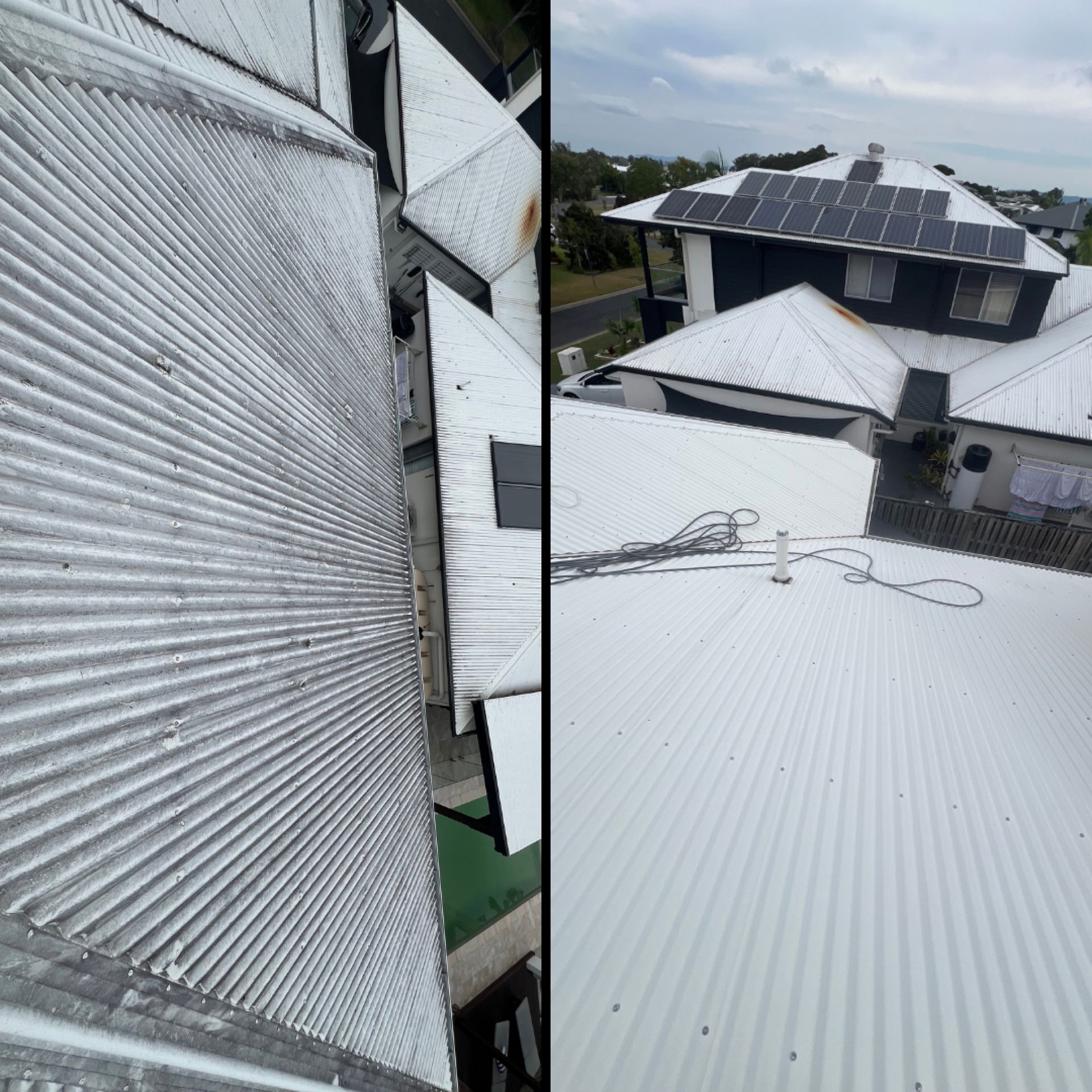
Colorbond house roof pressure cleaned as the preparation stage for an upcoming repaint job. Demonstrates the proper sequence for roof restoration work — thorough cleaning of all contamination, oxidisation, and biological growth must come before any paint goes near the surface, otherwise the paint system will fail well inside any reasonable warranty period.
Before & After
What We Did
Roof inspection & paint suitability check
Inspected the Colorbond surface to confirm it was sound enough to accept a paint system — checking for any structural damage, fastener issues, or coating failure that would need addressing before paint. Confirmed the underlying roof was in repaintable condition once properly cleaned.
Surrounds & solar panel protection
Protected adjacent solar panels, gutters, and surrounding roof sections from runoff and chemical drift. Particularly important for solar-equipped properties — runoff and chemical drift can affect panel performance if not managed correctly.
Initial soft wash biocide application
Applied soft wash biocide solution at low pressure across the entire roof surface to break down embedded mould, algae, and biological staining. Even when the end goal is repainting, the cleaning stage still needs proper chemistry — paint applied over live biological contamination will fail as the contamination continues to grow under the paint film.
Dwell & multi-pass treatment
Allowed full dwell time, then worked through multiple application and rinse cycles to fully clear the embedded contamination. Pre-paint cleaning needs to go further than a maintenance clean — any residue left behind compromises paint adhesion and accelerates paint failure.
Pressure clean — paint preparation phase
Followed with controlled pressure cleaning to clear all loose oxidisation, dead organic matter, and surface debris from the cleaned roof. This is the difference between a roof that's clean enough to look at and a roof that's clean enough to paint — paint preparation requires the surface to be free of any material that would compromise paint adhesion.
Final inspection & paint readiness
Walked the full roof to confirm the surface was uniformly clean, free of loose material, and ready for the painting stage to begin. Documented the prepared surface as the handover point between cleaning and painting phases.
The Result
The roof was cleaned to a paint-ready surface — fully cleared of contamination, oxidisation, and biological growth, with the underlying Colorbond surface uniformly clean and stable for the upcoming paint application. This is the preparation stage of a larger roof restoration job, and demonstrates the proper sequence: clean first, paint second, never reverse the order.
The quality of the preparation clean directly determines how long the subsequent paint system will last. Properly prepared roofs receiving a premium paint system typically deliver 10–15 years of service. Roofs painted over inadequately cleaned surfaces can fail within 3–5 years regardless of paint quality — which is why the prep stage matters as much as the paint itself.
Suitable For
Any roof being repainted should be properly cleaned first — paint over contamination, oxidisation, or biological growth fails fast regardless of paint quality or warranty length. The preparation stage is non-negotiable for any roof restoration that's expected to actually last. Operators offering one-day clean-and-paint jobs are skipping this stage and the customer pays for it later.
This Gold Coast property had a Colorbond house roof scheduled for a full repaint, and proper preparation was the first stage of that job. Pre-paint cleaning is fundamentally different from standalone roof cleaning — the goal isn’t just to make the roof look clean, it’s to deliver a surface that the paint system can actually bond to and last on. Anything left behind during the cleaning stage compromises everything that comes after it.
The before image shows what the roof looked like coming into the job: heavily oxidised, with embedded mould staining, surface contamination, and the kind of overall weathering that signals the original Colorbond coating has reached the end of its visual life. The owner had decided on a repaint rather than replacement, which is the right call when the underlying structure is sound — but it’s also the call that turns the preparation work into the most important stage of the job, not just the first one.
The cleaning stage ran as a soft wash plus pressure clean combined sequence. Soft wash biocide application breaks down the embedded mould and biological growth at the spore level — paint applied over live biological contamination fails as the contamination continues to grow under the paint film, regardless of how good the paint is. Multi-pass dwell and rinse cycles cleared the depth of contamination, then a controlled pressure clean phase cleared all loose oxidisation, dead organic matter, and surface debris from the cleaned roof. The end result is the after image: a surface that’s not just visually clean but structurally clean — uniformly stable, free of loose material, ready to accept the paint system without compromising adhesion.
This is what proper pre-paint preparation looks like. The quality of this stage directly determines how long the subsequent paint will last — properly prepared roofs receiving a premium paint system typically deliver 10–15 years of service, while roofs painted over inadequately cleaned surfaces commonly fail within 3–5 years. Operators who offer one-day clean-and-paint packages are skipping this stage, and the customer pays for it later when the paint starts failing well inside any reasonable warranty period. Any roof being repainted should go through this preparation properly, regardless of who’s doing the painting work that follows.
More Like This

Acit Commercial Facility Full External Clean — 3000m² in One Day
Logan
Single-day commercial external cleaning project for Acit ("We Speak Food") — a 3000m² facility cleaned across one working day. Full soft wash and pressure wash of all external walls, breeze block sections, render, soffits, eaves, and roller doors to remove heavy mould and organic contamination. Coordinated team delivery at scale, with the food industry's particular hygiene and presentation standards in mind.
View project →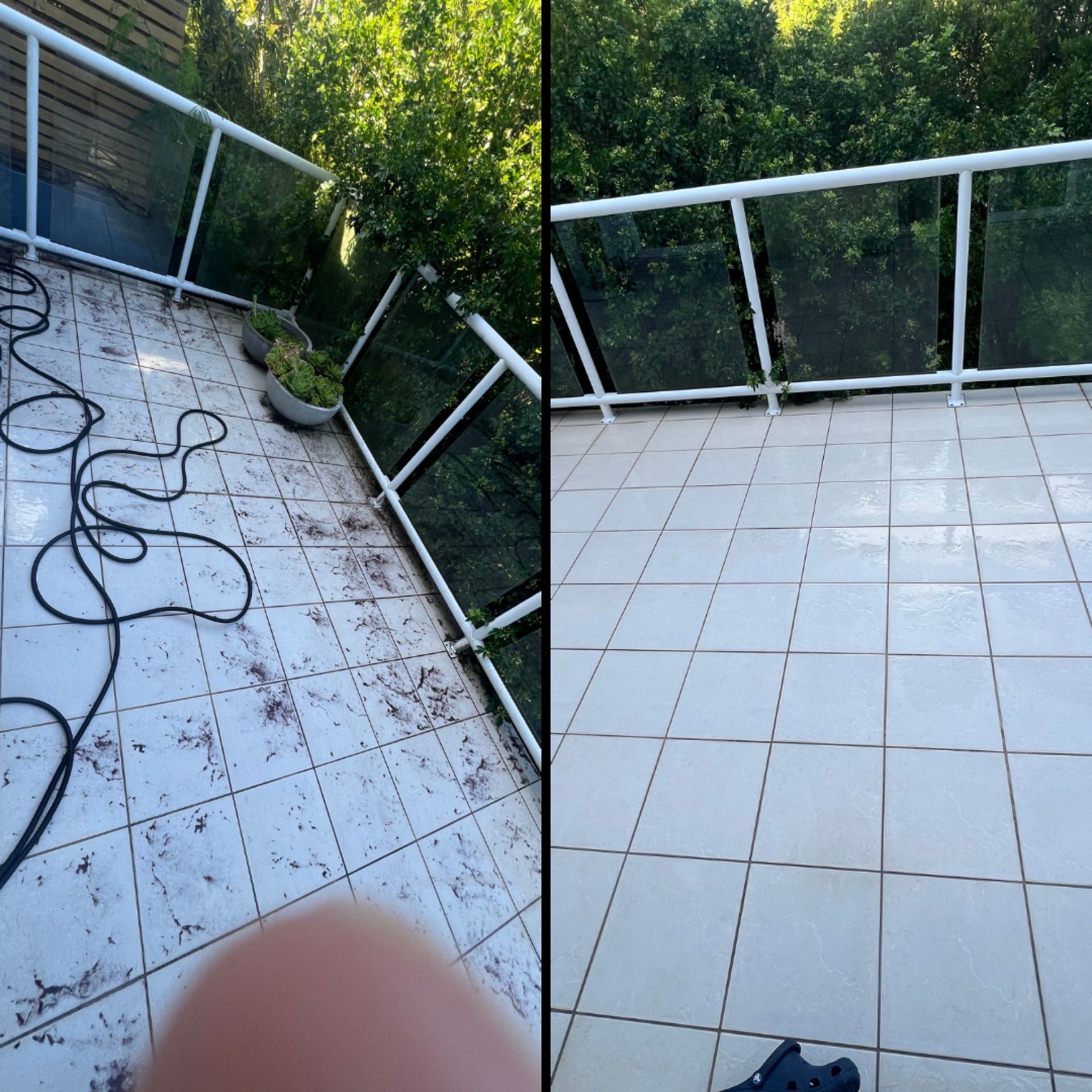
Balcony Tile Pressure Clean — Gold Coast
Gold Coast
Heavily stained white tile balcony in a Gold Coast residential property restored to clean original finish via pressure cleaning. Tiles, grout lines, glass balustrade, and white framing all returned to a clean, even appearance ready for use.
View project →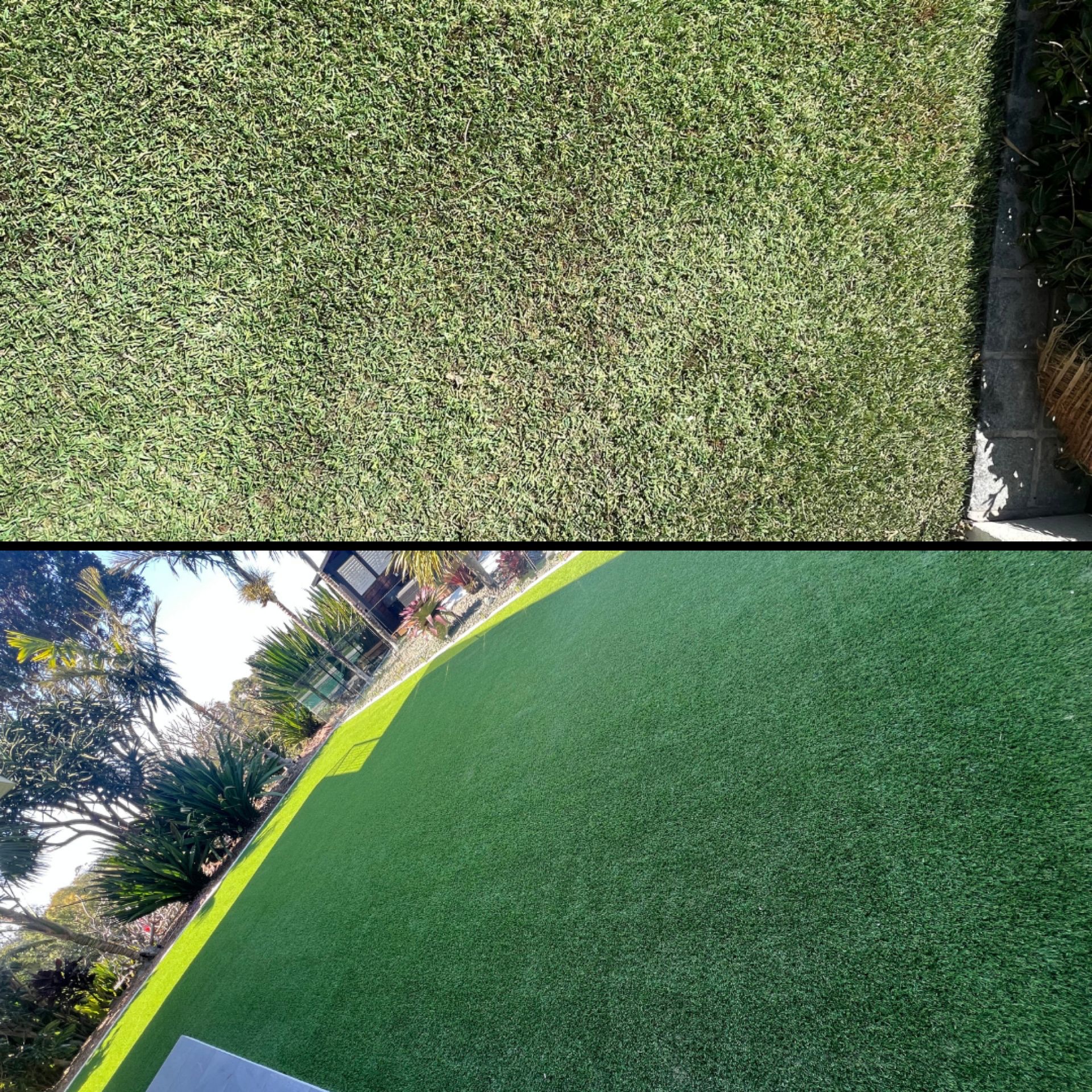
Byron Bay Mansion — Synthetic Turf Maintenance Package (6-Monthly)
Byron Bay
Ongoing 6-monthly maintenance package at a luxury Byron Bay mansion — synthetic turf restoration including debris and algae removal, pressure washing, fresh sand topup, and power brooming to maintain the turf in show-condition year-round. Plus surrounding hardscape pressure washing across stone retaining walls and feature elements. The kind of recurring maintenance contract that keeps a high-end property at presentation standard between major restoration cycles.
View project →