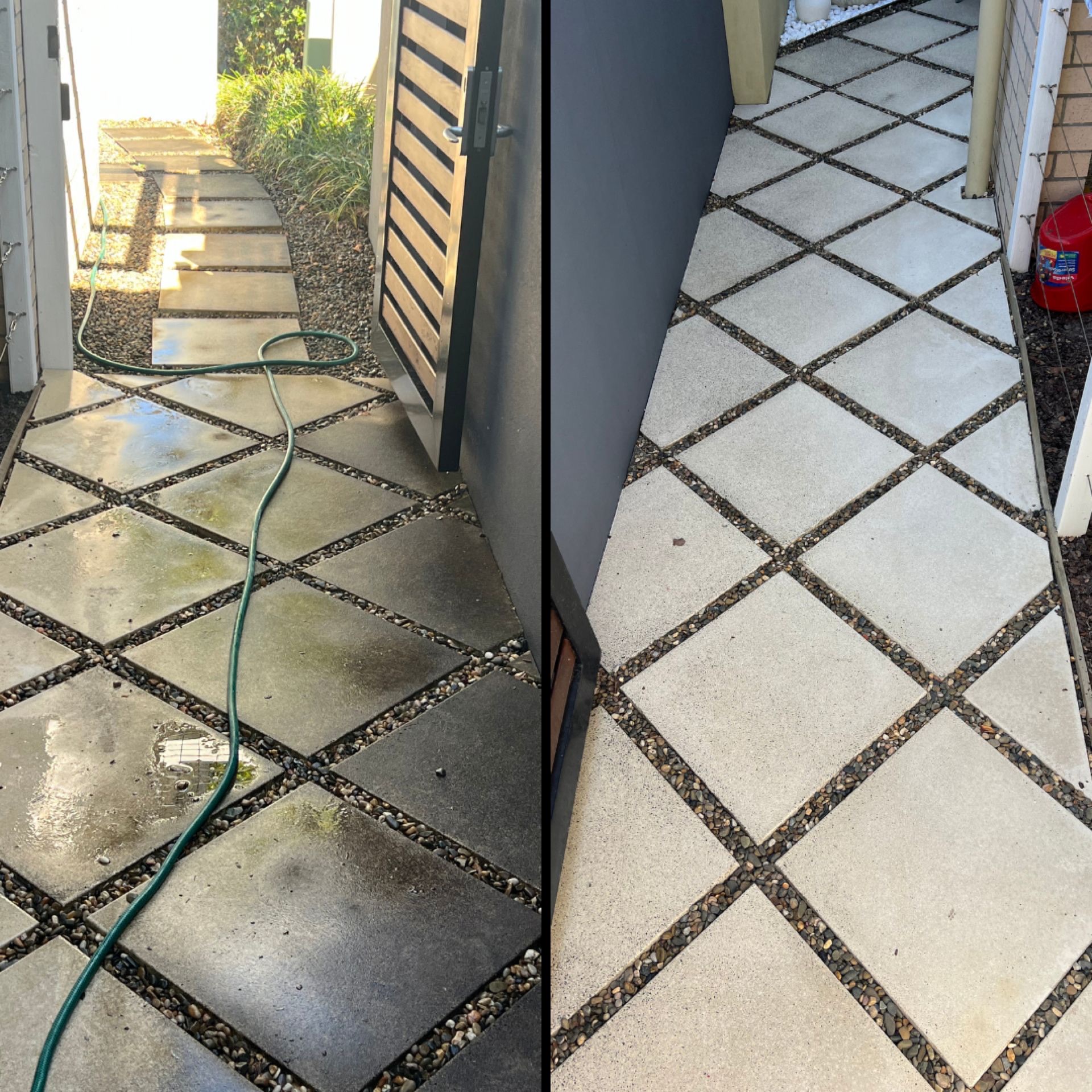
Pressure-wash restoration of a diamond-pattern paver pathway with heavy mould and algae buildup. The exposed-aggregate concrete pavers had darkened across the entire surface — restored using a paver-specific cleaning approach that lifted staining without displacing pebble joint infill or chipping paver edges.
Before & After
What We Did
Surface assessment
Checked the paver condition, joint material, and paver type to set the correct pressure level. Pavers need a different approach to slabs — too much pressure displaces joint infill and damages edges.
Pre-treatment for biological growth
Applied a biocide treatment to kill the mould and algae at the root. This stops the staining from coming back within weeks of cleaning — the visible green and black growth is just the surface symptom of an organic colony.
Controlled paver pressure clean
Used a calibrated pressure setting with the correct nozzle angle for pavers — strong enough to lift the embedded staining but controlled to protect the pebble joints and paver edges.
Joint inspection and rinse
Final rinse to clear all residue, followed by inspection of the pebble joint infill to confirm nothing was displaced. Topped up any disturbed joint material before packing down.
The Result
The exposed-aggregate texture is fully restored, the diamond pattern is crisp and visible again, and the pathway looks intentional rather than neglected. Pebble joint infill is intact, paver edges are clean and undamaged, and the side passage now matches the rest of the property's modern exterior.
The biocide pre-treatment slows regrowth significantly — typically 12–18 months before any noticeable buildup returns. Annual maintenance keeps pavers looking like this year-round, especially in shaded or moisture-prone areas.
Suitable For
Pavers need a different approach than slab concrete or tile — wrong pressure displaces joint infill, chips edges, or damages the surface texture. We adjust pressure, nozzle, and technique for the specific paver type so you get the clean without the damage or rework.
This diamond-pattern paver pathway in a side passage had built up significant mould and algae across the entire surface. The shaded position and frequent moisture exposure had created ideal conditions for biological growth, and the exposed-aggregate concrete had darkened to the point where the original cream tones were barely visible.
Pavers are one of the trickier surfaces to pressure wash properly. The joint material between pavers — whether sand, fine gravel, or pebbles like this one — can be displaced or washed out entirely if the pressure is too high or the nozzle angle is wrong. Paver edges can chip. The aggregate finish can lose its texture if attacked too aggressively. Most pressure-washing damage on residential properties happens to pavers and tile, not slab concrete — and the repair cost is often higher than the original clean.
The right approach is calibrated pressure with the correct nozzle and technique for the specific paver type. Strong enough to lift embedded staining and biological growth, controlled enough to protect the joint infill and paver edges. The result is a fully restored surface with no damage, no displacement, and no rework needed — just clean pavers ready for another decade of use.
More Like This

Acit Commercial Facility Full External Clean — 3000m² in One Day
Logan
Single-day commercial external cleaning project for Acit ("We Speak Food") — a 3000m² facility cleaned across one working day. Full soft wash and pressure wash of all external walls, breeze block sections, render, soffits, eaves, and roller doors to remove heavy mould and organic contamination. Coordinated team delivery at scale, with the food industry's particular hygiene and presentation standards in mind.
View project →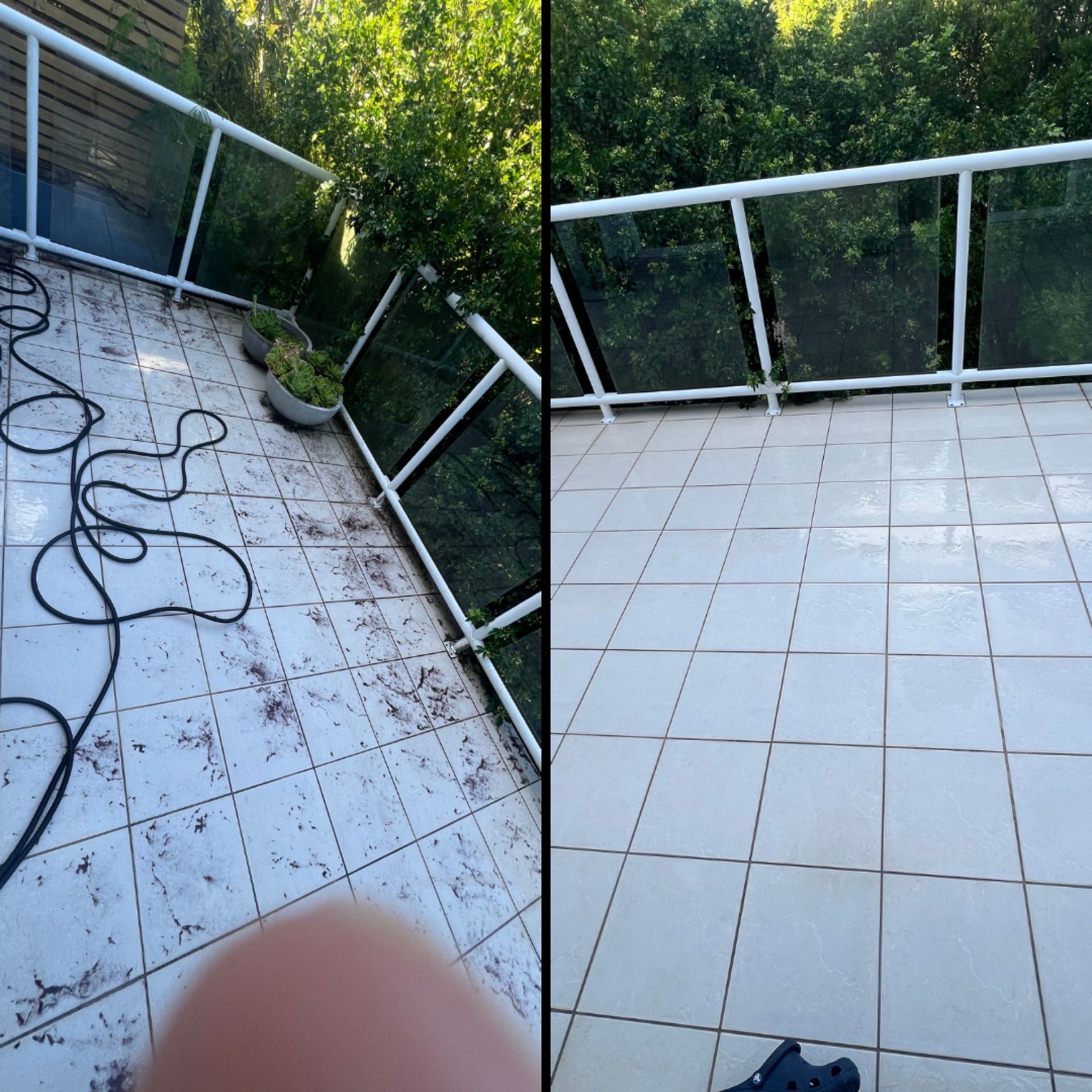
Balcony Tile Pressure Clean — Gold Coast
Gold Coast
Heavily stained white tile balcony in a Gold Coast residential property restored to clean original finish via pressure cleaning. Tiles, grout lines, glass balustrade, and white framing all returned to a clean, even appearance ready for use.
View project →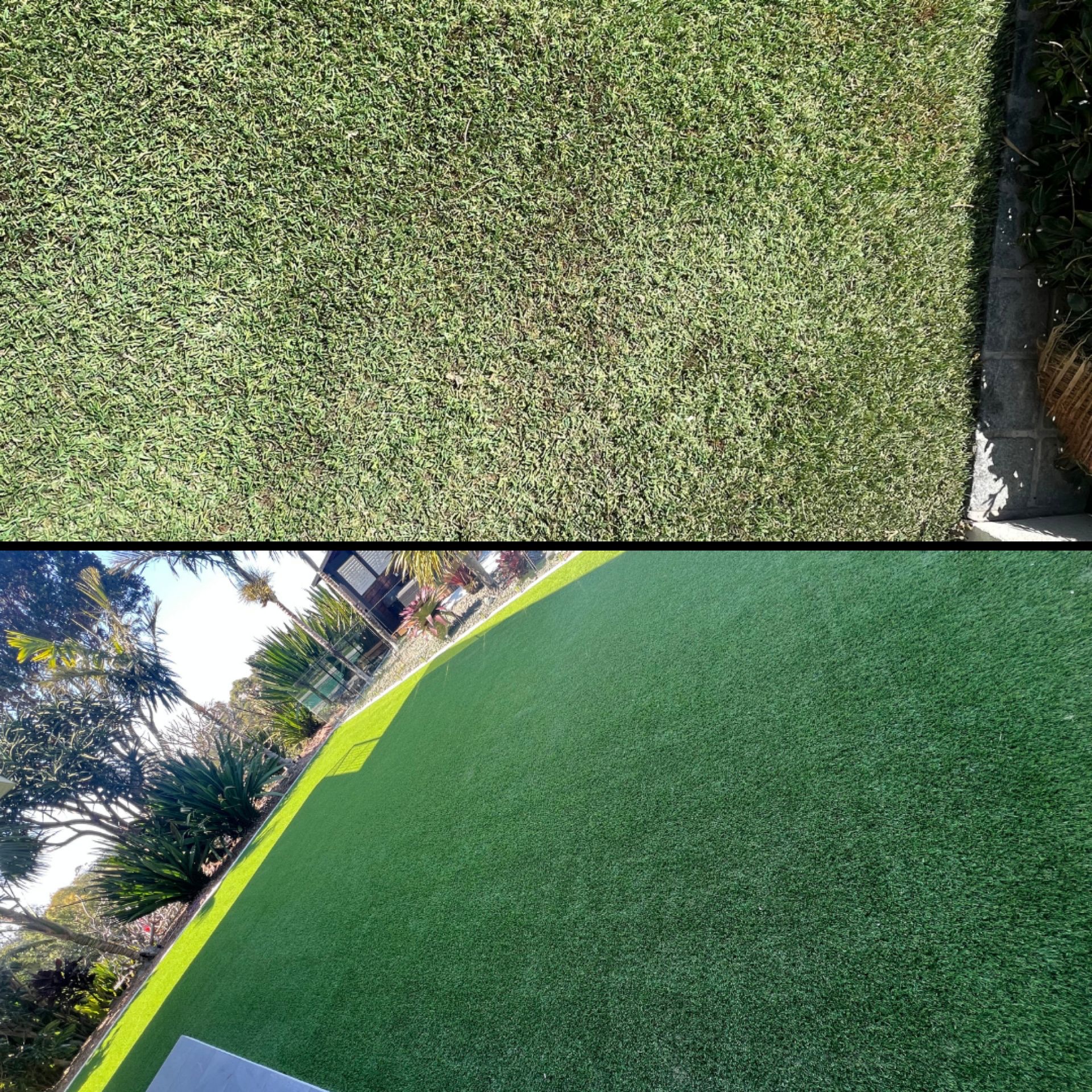
Byron Bay Mansion — Synthetic Turf Maintenance Package (6-Monthly)
Byron Bay
Ongoing 6-monthly maintenance package at a luxury Byron Bay mansion — synthetic turf restoration including debris and algae removal, pressure washing, fresh sand topup, and power brooming to maintain the turf in show-condition year-round. Plus surrounding hardscape pressure washing across stone retaining walls and feature elements. The kind of recurring maintenance contract that keeps a high-end property at presentation standard between major restoration cycles.
View project →