
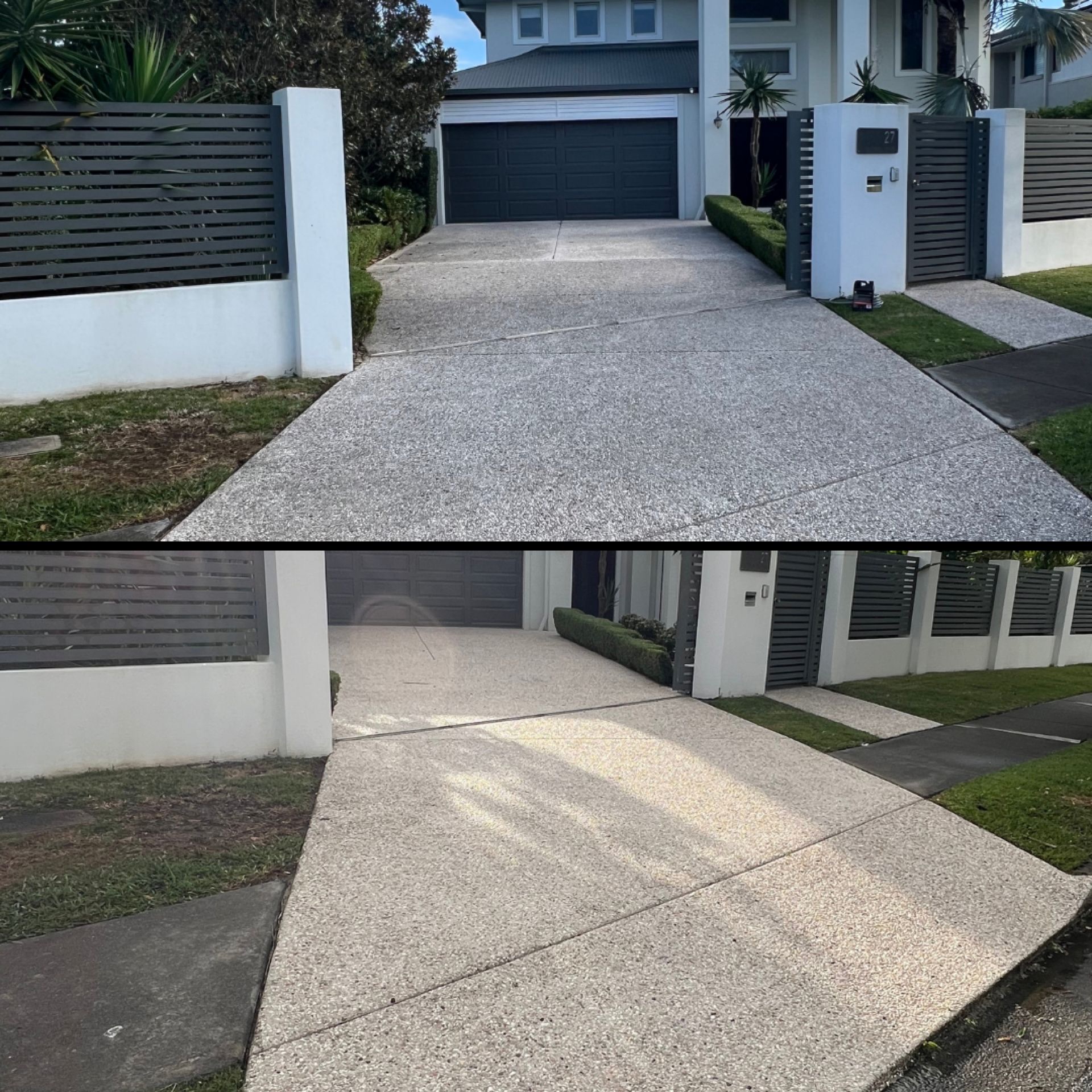
Exposed aggregate concrete driveway and adjoining footpath restored via pressure washing — removing accumulated dirt, tyre marks, and surface grime to reveal the original clean stone aggregate finish. The full driveway and front fence line returned to a sharp, modern presentation.
Before & After
What We Did
Surface assessment
Inspected the exposed aggregate finish to identify problem areas — tyre marks at the garage entry, accumulated dirt across the main driveway surface, and edge staining along the fence line and footpath.
Pre-treatment & area protection
Applied a degreaser to oil-stained and tyre-marked sections to break down embedded contaminants. Protected adjacent grass, garden beds, and the white rendered fence from runoff.
Surface cleaner pressure wash
Worked the entire driveway and footpath with a flat-surface pressure cleaner attachment, which delivers even, controlled pressure across exposed aggregate without damaging the stone finish or grout lines between concrete sections. Overlapping passes ensured no streaking or missed areas.
Edge & detail work
Hand-cleaned edges, expansion joints, and the transition between driveway and footpath using a wand at the appropriate pressure. These edges accumulate the most grime and need direct attention to match the cleaned main surface.
Final rinse & inspection
Final rinse to flush all loosened dirt and detergent residue away from the property to the gutter line. Walked the area to confirm even finish across both the driveway and adjoining footpath.
The Result
The driveway, footpath, and fence-line concrete were restored to a clean, even aggregate finish — tyre marks removed, accumulated grime cleared, and the original stone texture and colour fully revealed. The full job was completed in a single visit.
Exposed aggregate driveways typically benefit from a pressure clean every 12–18 months in residential settings, depending on traffic volume and tree cover. Sealing after cleaning can extend that interval significantly.
Suitable For
Pressure washing with a flat-surface cleaner is the most effective method for exposed aggregate and decorative concrete — delivering even pressure that cleans without damaging the stone finish. For best results on older or unsealed surfaces, sealing after the clean locks in the result and slows future regrowth of dirt and algae.
This Tweed Heads property had a stylish exposed aggregate driveway that had lost its visual sharpness over time — accumulated dirt across the main surface, dark tyre marks at the garage entry, and edge staining along the white rendered fence line and adjoining footpath. The home itself is contemporary and well-presented, but the driveway was pulling the overall street appeal down significantly.
The restoration was straightforward but technique-dependent. Exposed aggregate is a popular driveway finish for its texture and visual interest, but those same qualities mean dirt embeds into the surface more than smooth concrete — and cleaning it requires a flat-surface pressure cleaner attachment to deliver even, controlled pressure across the stone without damaging the finish or blowing out the grout lines between concrete sections. Edges, expansion joints, and the garage entry zone need direct hand-wand work to match the cleaned main surface.
After degreaser pre-treatment on the tyre-marked sections, surface cleaner work across the main driveway and footpath, and a final detail rinse, the entire concrete area was returned to a clean, even aggregate finish — original stone colour and texture fully revealed. Suitable for any exposed aggregate, decorative concrete, or standard concrete driveway, plus footpaths, pool surrounds, and commercial concrete surfaces. Sealing after cleaning is worth considering for properties wanting to extend the result.
More Like This

Acit Commercial Facility Full External Clean — 3000m² in One Day
Logan
Single-day commercial external cleaning project for Acit ("We Speak Food") — a 3000m² facility cleaned across one working day. Full soft wash and pressure wash of all external walls, breeze block sections, render, soffits, eaves, and roller doors to remove heavy mould and organic contamination. Coordinated team delivery at scale, with the food industry's particular hygiene and presentation standards in mind.
View project →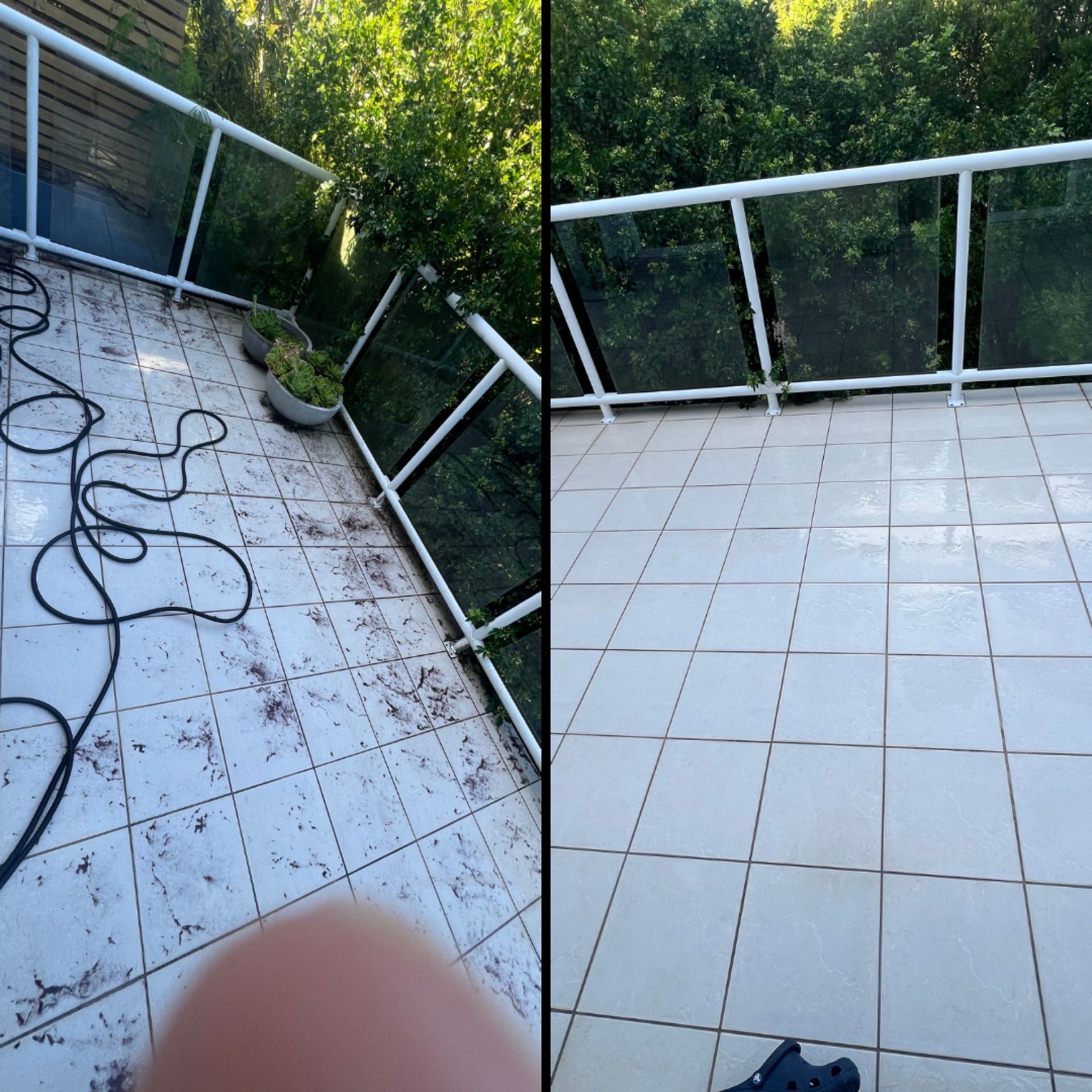
Balcony Tile Pressure Clean — Gold Coast
Gold Coast
Heavily stained white tile balcony in a Gold Coast residential property restored to clean original finish via pressure cleaning. Tiles, grout lines, glass balustrade, and white framing all returned to a clean, even appearance ready for use.
View project →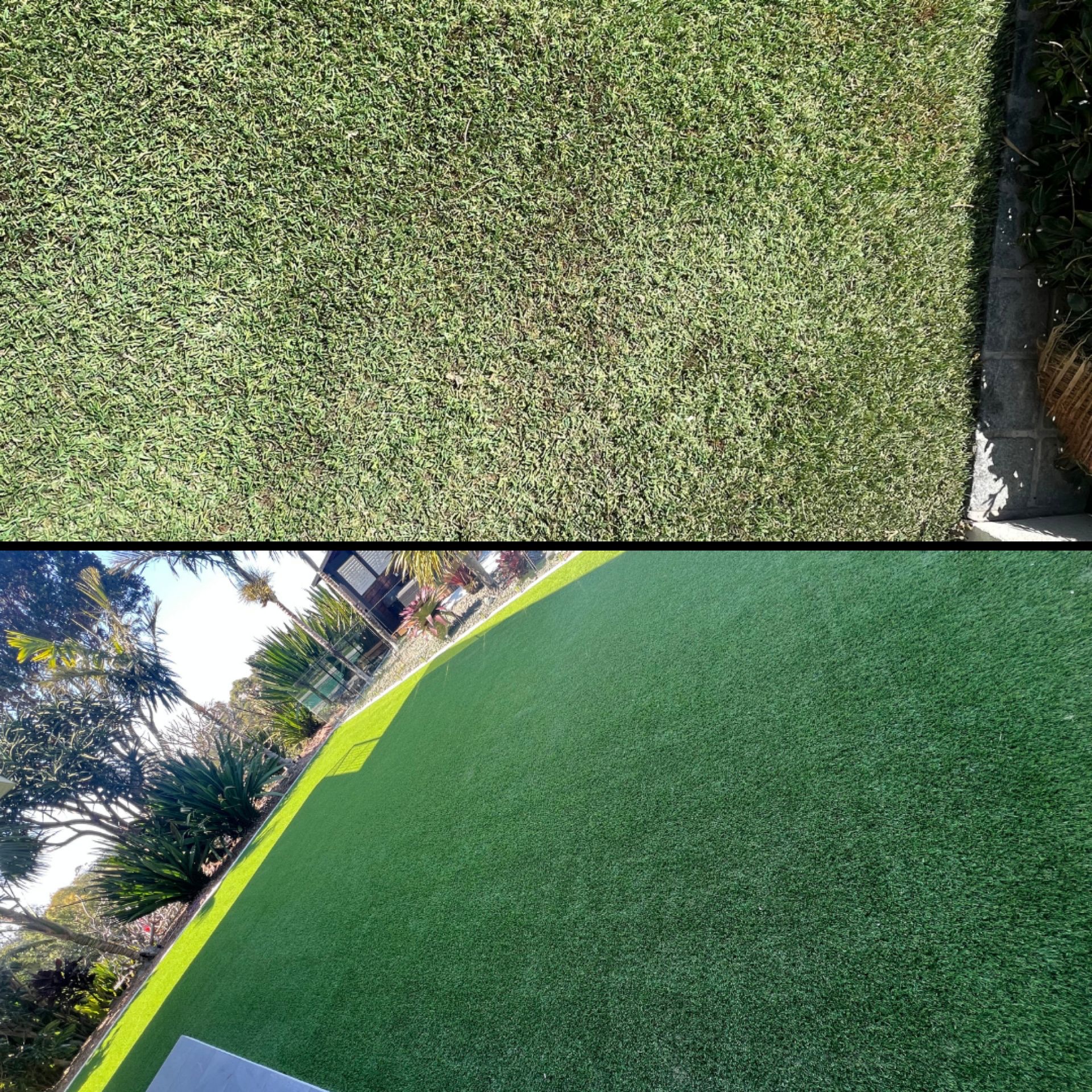
Byron Bay Mansion — Synthetic Turf Maintenance Package (6-Monthly)
Byron Bay
Ongoing 6-monthly maintenance package at a luxury Byron Bay mansion — synthetic turf restoration including debris and algae removal, pressure washing, fresh sand topup, and power brooming to maintain the turf in show-condition year-round. Plus surrounding hardscape pressure washing across stone retaining walls and feature elements. The kind of recurring maintenance contract that keeps a high-end property at presentation standard between major restoration cycles.
View project →