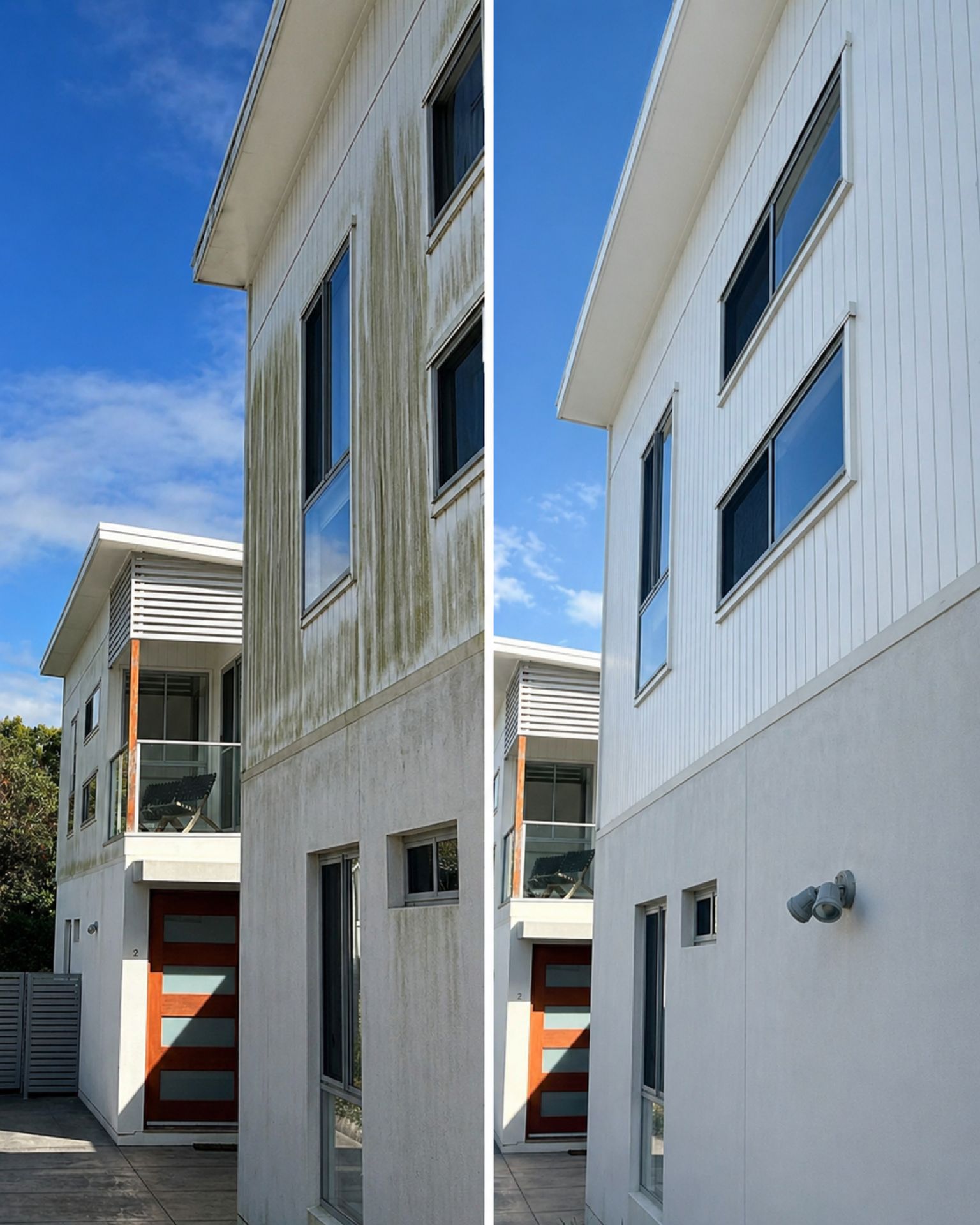
Two-storey coastal home with heavy green algae and mould streaking across white weatherboard cladding and rendered walls, restored using a safe soft wash biocide treatment. The full elevation was returned to clean, even white without damage to cladding or paint.
Before & After
What We Did
Surface assessment & protection
Inspected cladding type, identified the extent of algae penetration, and protected nearby plants, the timber deck, and the orange feature door from chemical drift.
Biocide application
Applied a specialised soft wash biocide solution at low pressure, ensuring full coverage across the weatherboard cladding, render, soffits, and around window frames. The treatment kills mould and algae at the root rather than only removing surface staining.
Dwell & treatment
Allowed the solution to dwell and break down the organic growth — this is what makes soft washing more durable than pressure cleaning alone.
Low-pressure rinse
Rinsed the entire elevation with clean water at a pressure safe for weatherboard cladding, working top-down to flush all residue away from windows, the balcony, and the entry path.
Final inspection
Walked the elevation to confirm no streaking, residue, or missed sections, and removed protective coverings.
The Result
The home's side elevation was restored from heavily algae-stained to evenly clean and bright white, with no damage to cladding, paint, or surrounding finishes. The full elevation was completed in a single visit.
Soft wash treatments typically resist algae and mould regrowth for 12–24 months in coastal environments — significantly longer than pressure washing alone, which only removes visible staining without killing spores.
Suitable For
Soft washing is the recommended method for any painted, rendered, or cladding surface where high-pressure water could force moisture behind boards or damage finishes. Particularly important for two-storey and taller homes where access is restricted.
This modern two-storey coastal home had developed extensive green algae and mould staining across its white weatherboard cladding and rendered lower walls — a common issue in humid, salt-air environments where shaded elevations stay damp long enough for organic growth to colonise the surface. The staining streaked down from the gutter line, drawing the eye to the discolouration and making the entire elevation look aged and neglected despite the home itself being in excellent condition.
The restoration was handled via soft wash — the only safe approach for weatherboard cladding at this height. Soft washing applies a specialised biocide solution at low pressure, killing algae and mould at the spore level rather than relying on high-pressure water to blast surface staining off. High-pressure cleaning on cladding like this risks forcing water behind boards, lifting paint, and leaving the underlying organic growth alive to return within months.
After treatment, dwell time, and a careful low-pressure rinse, the elevation was returned to a clean, even white finish. Because the biocide kills the algae at the root, soft wash treatments typically hold up for 12–24 months in coastal climates — well beyond what a pressure rinse alone would achieve. Suitable for cladding, render, painted surfaces, soffits, and any multi-storey home where access and surface protection both matter.
More Like This

Acit Commercial Facility Full External Clean — 3000m² in One Day
Logan
Single-day commercial external cleaning project for Acit ("We Speak Food") — a 3000m² facility cleaned across one working day. Full soft wash and pressure wash of all external walls, breeze block sections, render, soffits, eaves, and roller doors to remove heavy mould and organic contamination. Coordinated team delivery at scale, with the food industry's particular hygiene and presentation standards in mind.
View project →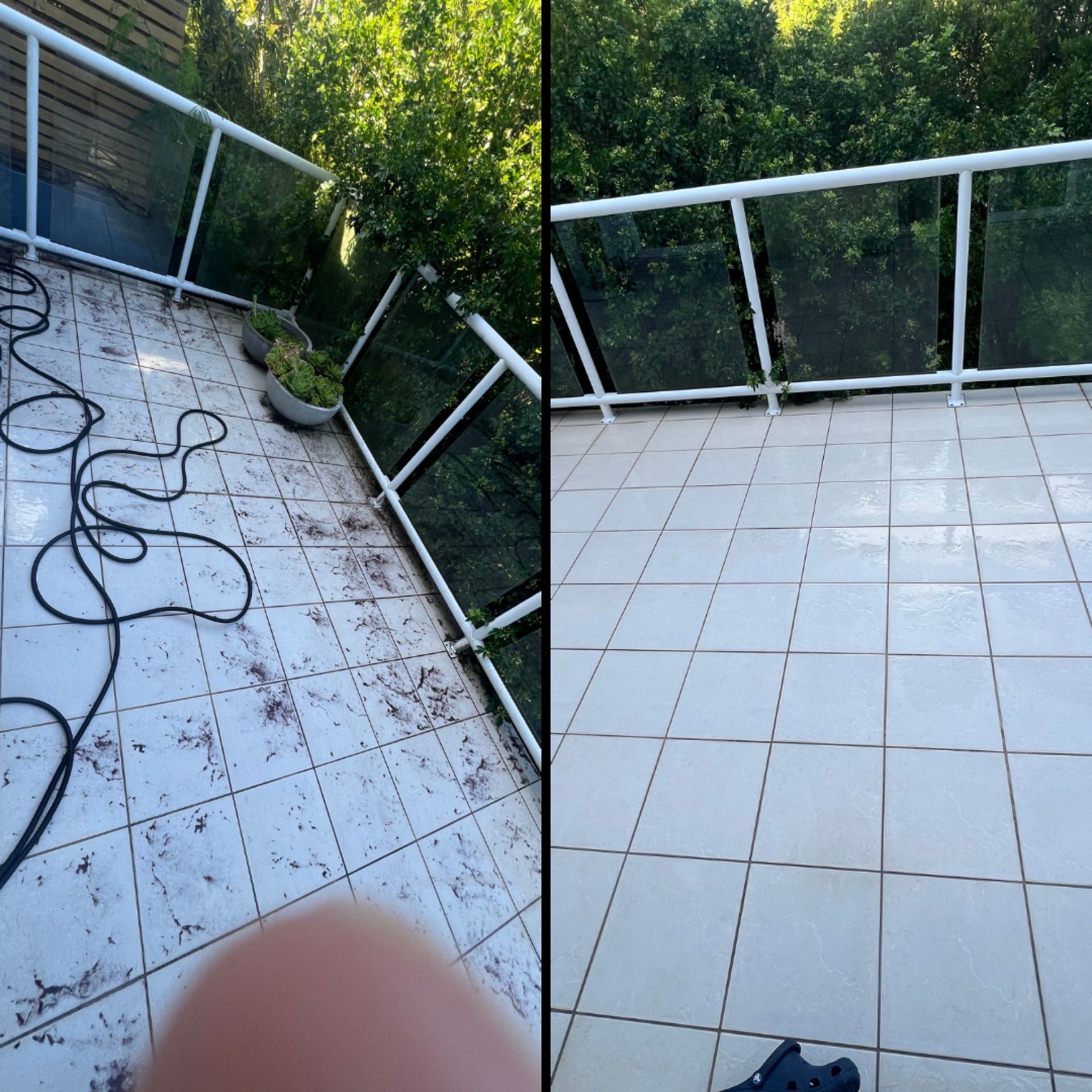
Balcony Tile Pressure Clean — Gold Coast
Gold Coast
Heavily stained white tile balcony in a Gold Coast residential property restored to clean original finish via pressure cleaning. Tiles, grout lines, glass balustrade, and white framing all returned to a clean, even appearance ready for use.
View project →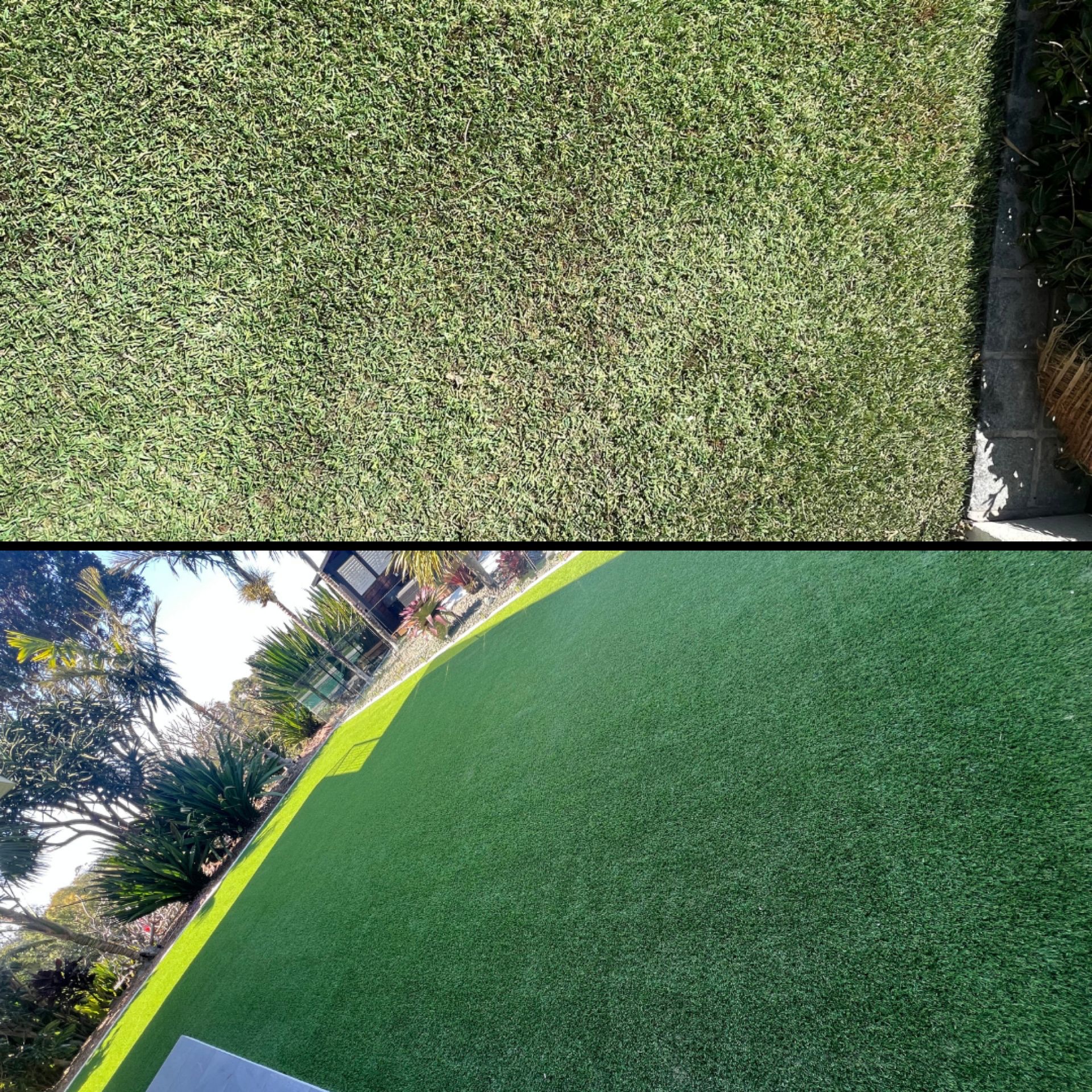
Byron Bay Mansion — Synthetic Turf Maintenance Package (6-Monthly)
Byron Bay
Ongoing 6-monthly maintenance package at a luxury Byron Bay mansion — synthetic turf restoration including debris and algae removal, pressure washing, fresh sand topup, and power brooming to maintain the turf in show-condition year-round. Plus surrounding hardscape pressure washing across stone retaining walls and feature elements. The kind of recurring maintenance contract that keeps a high-end property at presentation standard between major restoration cycles.
View project →