
Synthetic Grass Tennis Court Restoration & Resand
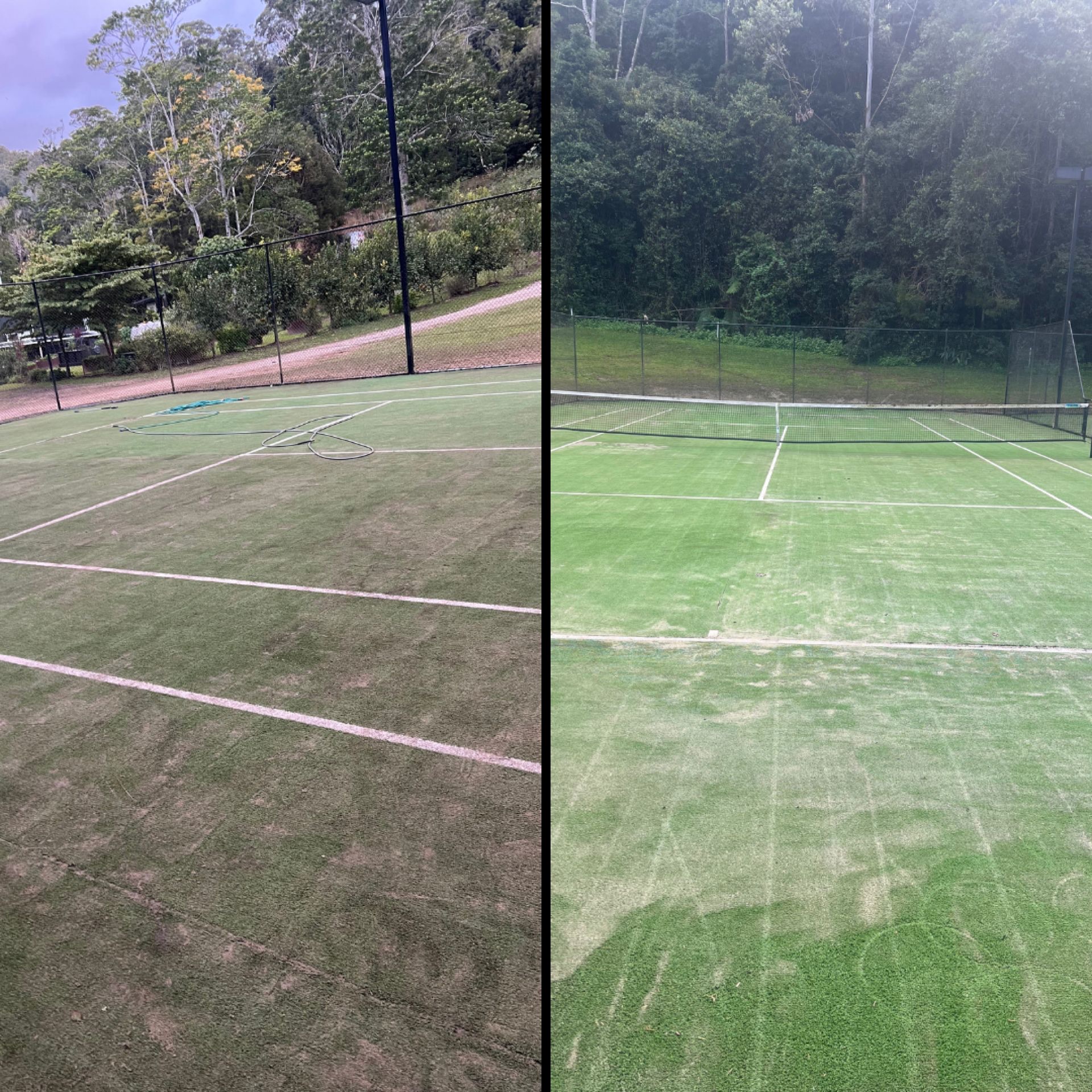
Sand-filled synthetic grass tennis court restored through a multi-stage clean — powerbrushing, pressure washing, and court-safe soft wash treatment to remove surface dirt, lichen, and mould — followed by removal of contaminated sand and reinstallation of fresh, evenly distributed infill sand. The court was returned to clean, level, playable condition.
Before & After
What We Did
Court assessment
Inspected the playing surface to assess fibre condition, sand infill levels, line marking integrity, and the extent of lichen, mould, and dirt contamination. Confirmed the synthetic grass was sound and a clean-and-resand restoration would deliver the result — full court replacement was not required.
Powerbrushing
Worked the entire court surface with a specialised powerbrush to lift the synthetic grass fibres, dislodge embedded contamination, and bring displaced and contaminated sand to the surface. This is the critical first step — without lifting the fibres, surface cleaning only treats the visible top layer and leaves the embedded grime intact.
Court-safe soft wash & pressure clean
Applied a soft wash treatment using chemicals specifically formulated to be safe for synthetic grass fibres and infill sand — standard biocides can degrade synthetic fibres or affect sand colour. Combined with controlled pressure washing to remove lichen, mould, surface dirt, and biological staining without damaging the fibre structure or line markings.
Sand removal & disposal
Removed the displaced and contaminated sand infill from the entire court — this old sand carries the bulk of embedded organic matter and dirt that brushing alone won't clear. Disposed of removed sand offsite to leave the court ready for fresh infill.
Fresh sand reinstallation
Reinstalled fresh court-grade infill sand evenly across the entire playing surface, ensuring correct depth distribution. Sand infill is what gives synthetic grass courts their playing characteristics — bounce, ball speed, and player footing all depend on correct sand level and even distribution.
Brushing & final finish
Brushed the fresh sand thoroughly into the fibre structure to lock it into place and stand the fibres upright. This final brush is what produces the clean, even, playable finish visible in the after photo.
The Result
The court was restored from a heavily contaminated, dirt- and lichen-stained surface with displaced sand and faded markings into a clean, level, playable synthetic grass court with fresh infill, lifted fibres, and visible line markings. The full multi-stage restoration was completed without replacing the synthetic grass itself — a fraction of the cost of full court replacement.
Synthetic grass courts typically benefit from a full clean-and-resand restoration every 3–5 years depending on usage, tree cover, and climate exposure. Annual lighter maintenance cleans between full restorations significantly extend court lifespan.
Suitable For
Synthetic grass court restoration is a specialist service requiring proper equipment (powerbrush, court-safe chemicals, infill sand) and method. Standard exterior cleaning techniques will not restore a contaminated court and may damage the fibres or strip too much sand. The result of a proper clean-and-resand is often comparable to a much more expensive full court replacement.
This synthetic grass tennis court had reached the point most sand-filled courts arrive at after several years of use without a deep restoration — heavily discoloured fibres, lichen and mould staining across the playing surface, displaced and contaminated infill sand, and faded line markings. The court was still structurally sound, but it had become unplayable in any serious sense and was visually well past its presentable life. The owner was weighing up whether to fully replace the court or attempt a restoration.
The work was a multi-stage specialist job, not a single clean. Step one was powerbrushing the entire surface with equipment designed for synthetic turf — this lifts the fibres, brings displaced sand and embedded grime to the surface, and is what allows the cleaning steps to actually reach the contamination rather than just skating across the top layer. Step two was a controlled soft wash using chemicals specifically formulated to be safe for synthetic grass and infill sand — standard biocides can degrade synthetic fibres or discolour the sand, so court-specific products are essential. Combined with a correctly pressured rinse, this cleared the lichen, mould, and biological staining without damaging the fibre structure or line markings.
Step three was the sand work. The contaminated infill sand was fully removed and disposed of offsite — this old sand carries most of the embedded organic matter, and brushing alone won’t clear it. Fresh court-grade infill was then installed evenly across the playing surface to the correct depth, then brushed thoroughly into the fibres to lock it into place and stand the grass upright. The final result is a clean, even, playable surface with crisp line markings — at a fraction of the cost of full court replacement.
This service suits any synthetic grass tennis court, multi-sport synthetic surface, sand-filled artificial turf, or synthetic bowling green — residential, strata, club, or commercial. Standard exterior cleaning techniques will not restore a contaminated synthetic court and risk damaging the fibres, so it’s worth using someone who handles courts specifically.
More Like This

Acit Commercial Facility Full External Clean — 3000m² in One Day
Logan
Single-day commercial external cleaning project for Acit ("We Speak Food") — a 3000m² facility cleaned across one working day. Full soft wash and pressure wash of all external walls, breeze block sections, render, soffits, eaves, and roller doors to remove heavy mould and organic contamination. Coordinated team delivery at scale, with the food industry's particular hygiene and presentation standards in mind.
View project →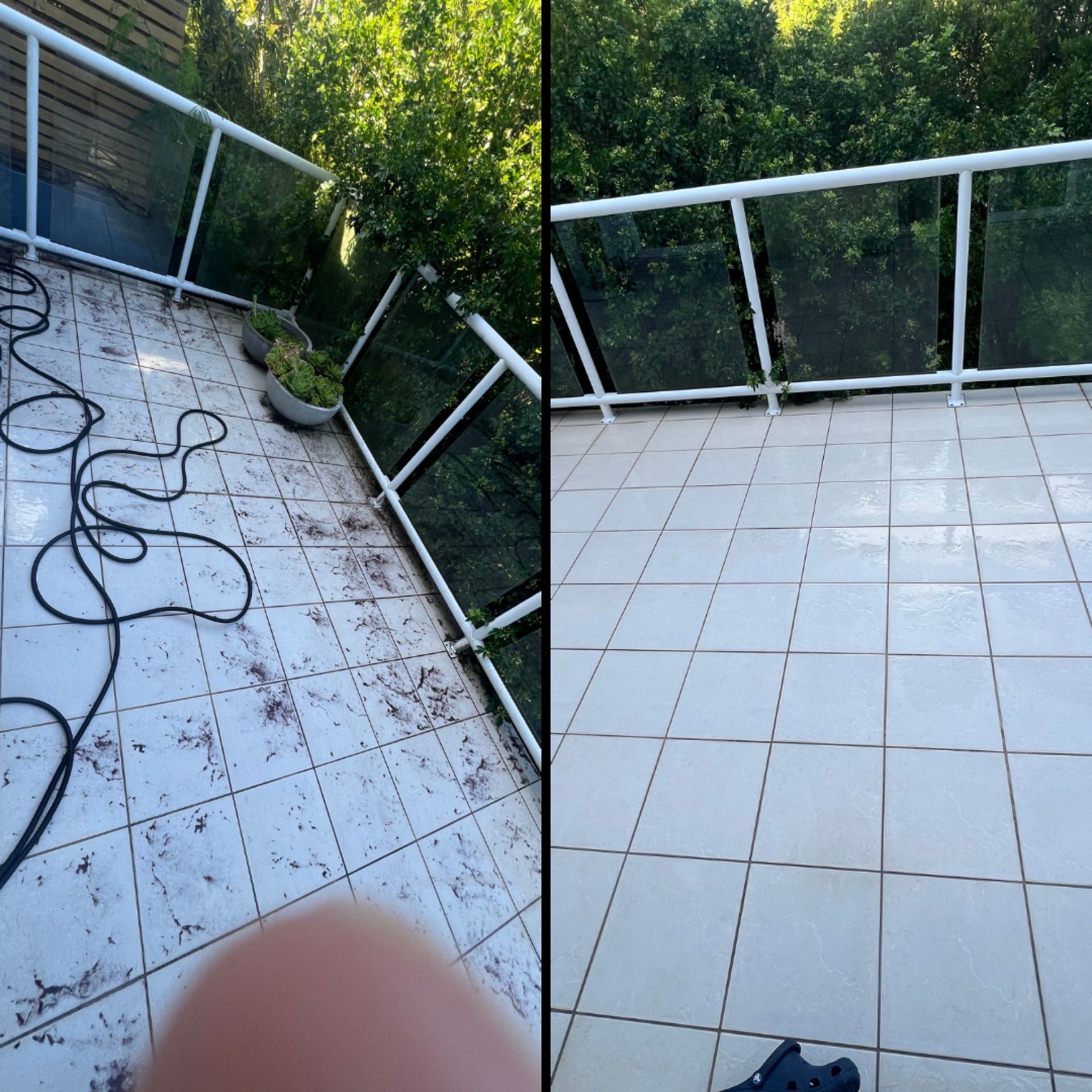
Balcony Tile Pressure Clean — Gold Coast
Gold Coast
Heavily stained white tile balcony in a Gold Coast residential property restored to clean original finish via pressure cleaning. Tiles, grout lines, glass balustrade, and white framing all returned to a clean, even appearance ready for use.
View project →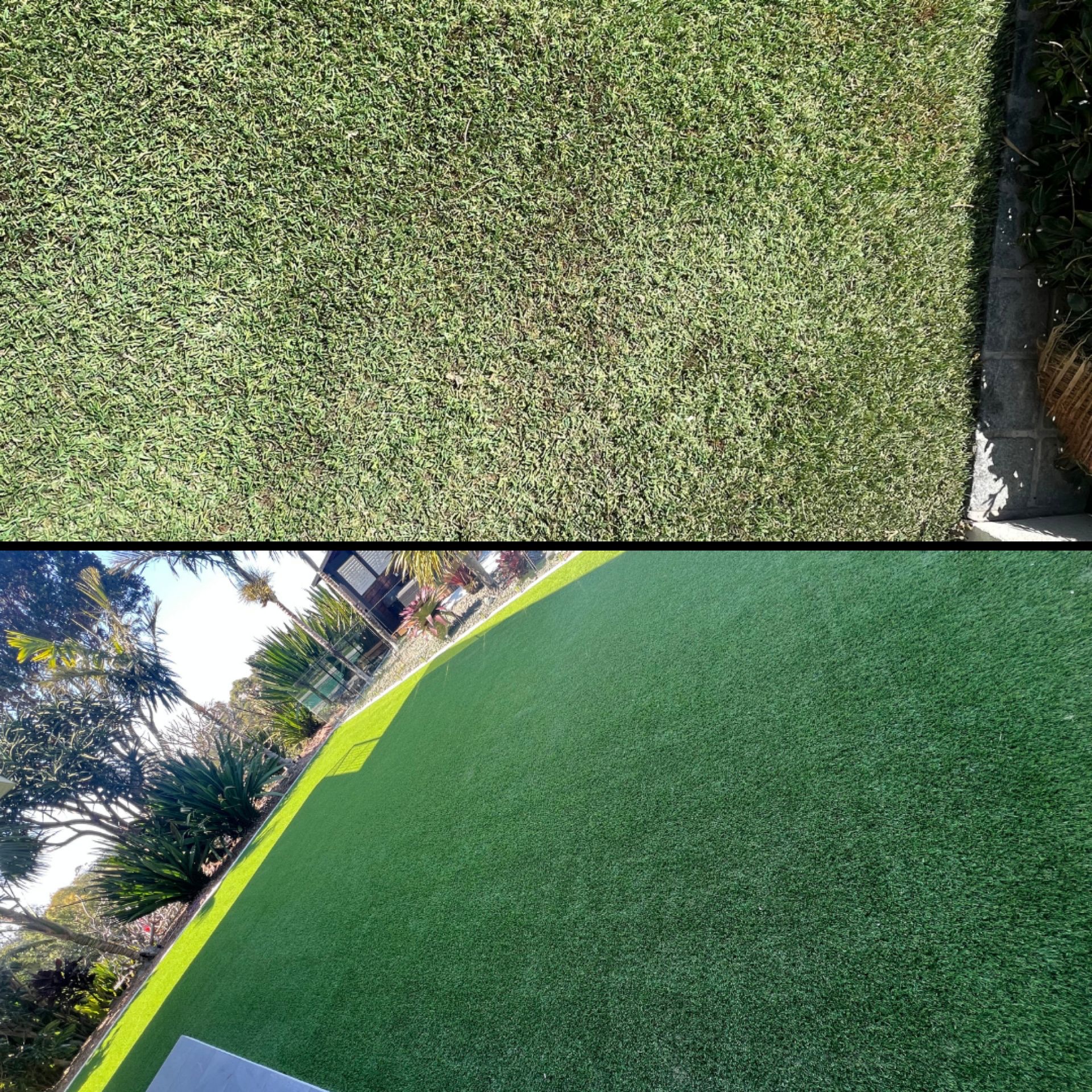
Byron Bay Mansion — Synthetic Turf Maintenance Package (6-Monthly)
Byron Bay
Ongoing 6-monthly maintenance package at a luxury Byron Bay mansion — synthetic turf restoration including debris and algae removal, pressure washing, fresh sand topup, and power brooming to maintain the turf in show-condition year-round. Plus surrounding hardscape pressure washing across stone retaining walls and feature elements. The kind of recurring maintenance contract that keeps a high-end property at presentation standard between major restoration cycles.
View project →